The History of Tarot
A journey from Renaissance card games to modern mysticism
Origins: Renaissance Italy (c. 1420–1500)
Tarot cards first appeared in northern Italy in the early fifteenth century, not as tools of divination, but as playing cards for a game called tarocchi. The earliest surviving examples — including the famous Visconti-Sforza deck, painted around 1450 for the ruling families of Milan — were luxury objects, hand-painted and gilded, accessible only to the wealthy nobility.
These early decks typically consisted of the standard four-suited playing card pack, supplemented by a fifth suit of illustrated "triumph" cards — allegorical figures drawn from medieval Christian tradition, classical mythology, and courtly culture. These trump cards included figures such as The Emperor, The Pope, Death, and The World, forming the basis of what we now call the Major Arcana.


The Sola Busca deck of 1491 is particularly significant: it is the oldest known complete tarot deck, and unique in that all 78 cards — including the Minor Arcana pip cards — feature fully illustrated scenes rather than simple geometric arrangements of suit symbols. Its enigmatic imagery, drawn from classical mythology and Hermetic symbolism, directly inspired Pamela Colman Smith when she designed the iconic Rider-Waite-Smith Minor Arcana in 1909.
The French Occult Revival (1700s–1800s)
The Tarot de Marseille, standardised in France during the early eighteenth century, became the dominant European tarot tradition for nearly two centuries. This deck introduced the bold geometric pip cards and stylised Major Arcana imagery that remain highly influential today.
It was in France that tarot first became associated with esoteric and divinatory practice. In 1781, Antoine Court de Gébelin, a Swiss clergyman and Freemason, published an influential (though historically inaccurate) essay claiming that tarot originated in ancient Egypt and encoded the secrets of the Egyptian Book of Thoth. Though this theory has no historical basis, it captured the imagination of the growing occultist community and permanently linked tarot with mysticism and hidden wisdom.
Through the nineteenth century, French occultists — including Etteilla, Eliphas Lévi, and Papus — elaborated tarot's esoteric associations, weaving together the cards with Kabbalah, astrology, numerology, and Hermetic philosophy. Stanislas de Guaita commissioned Oswald Wirth to create a new deck in 1889 that explicitly integrated Kabbalistic symbolism and Hebrew letter correspondences into each Major Arcana card, reflecting the intellectual ambitions of the occult revival.


The Rider-Waite-Smith Revolution (1909)
The most influential moment in modern tarot history came in 1909, when Arthur Edward Waite, a member of the Hermetic Order of the Golden Dawn, commissioned artist Pamela Colman Smith to create what would become the Rider-Waite-Smith deck. Published by the Rider Company of London, it broke radically from all previous tarot traditions in one crucial way: for the first time, every card in the Minor Arcana featured a fully illustrated narrative scene, not just geometric arrangements of cups, wands, swords, and pentacles.
Smith, herself an artist and occultist, drew inspiration from the Sola Busca deck (which she had studied at the British Museum), medieval woodcuts, and her own visionary imagination. The result was a visual language for tarot that was immediately accessible to intuitive readers — you could look at the scene on any card and derive meaning from it directly, without requiring knowledge of numerological or Kabbalistic systems.
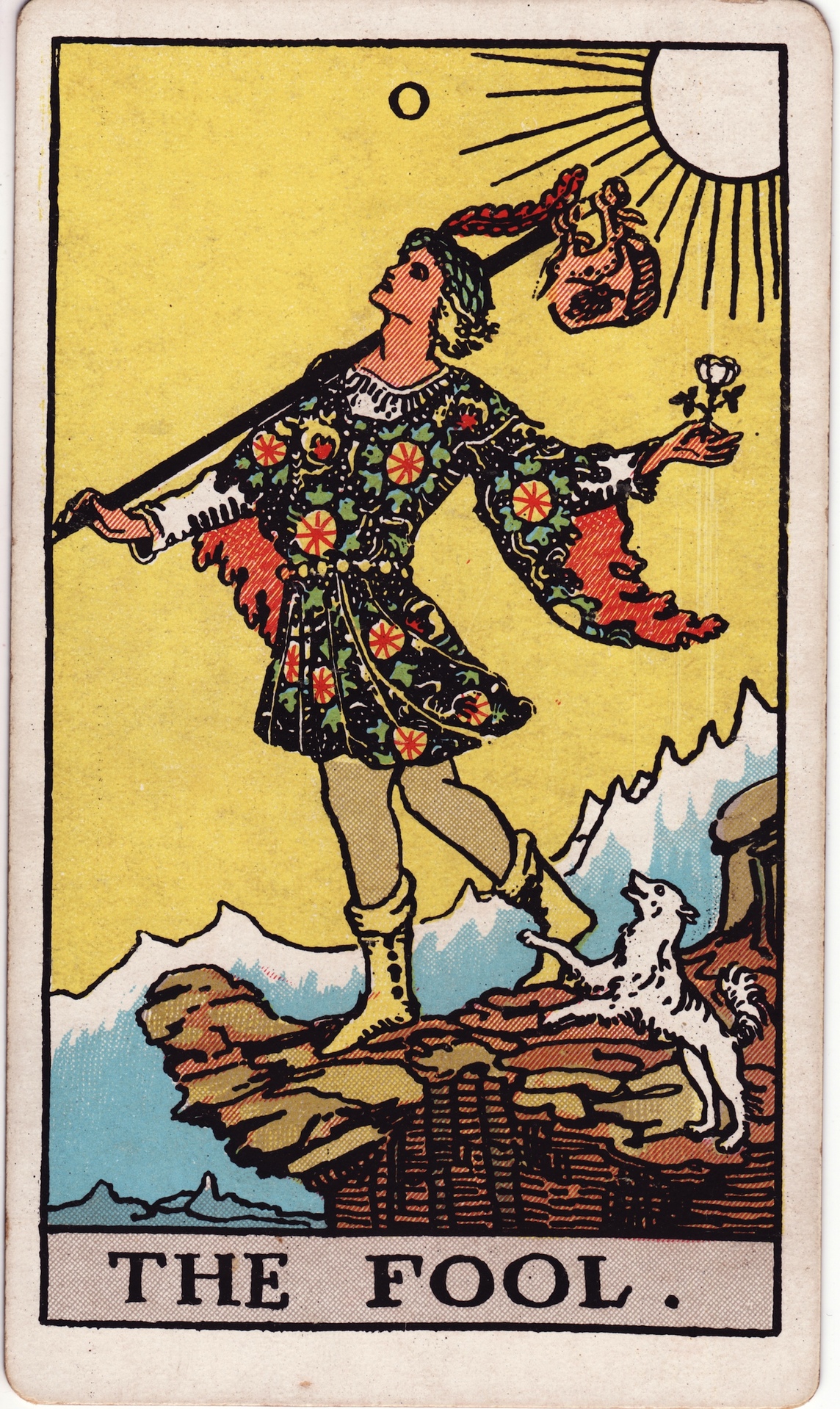
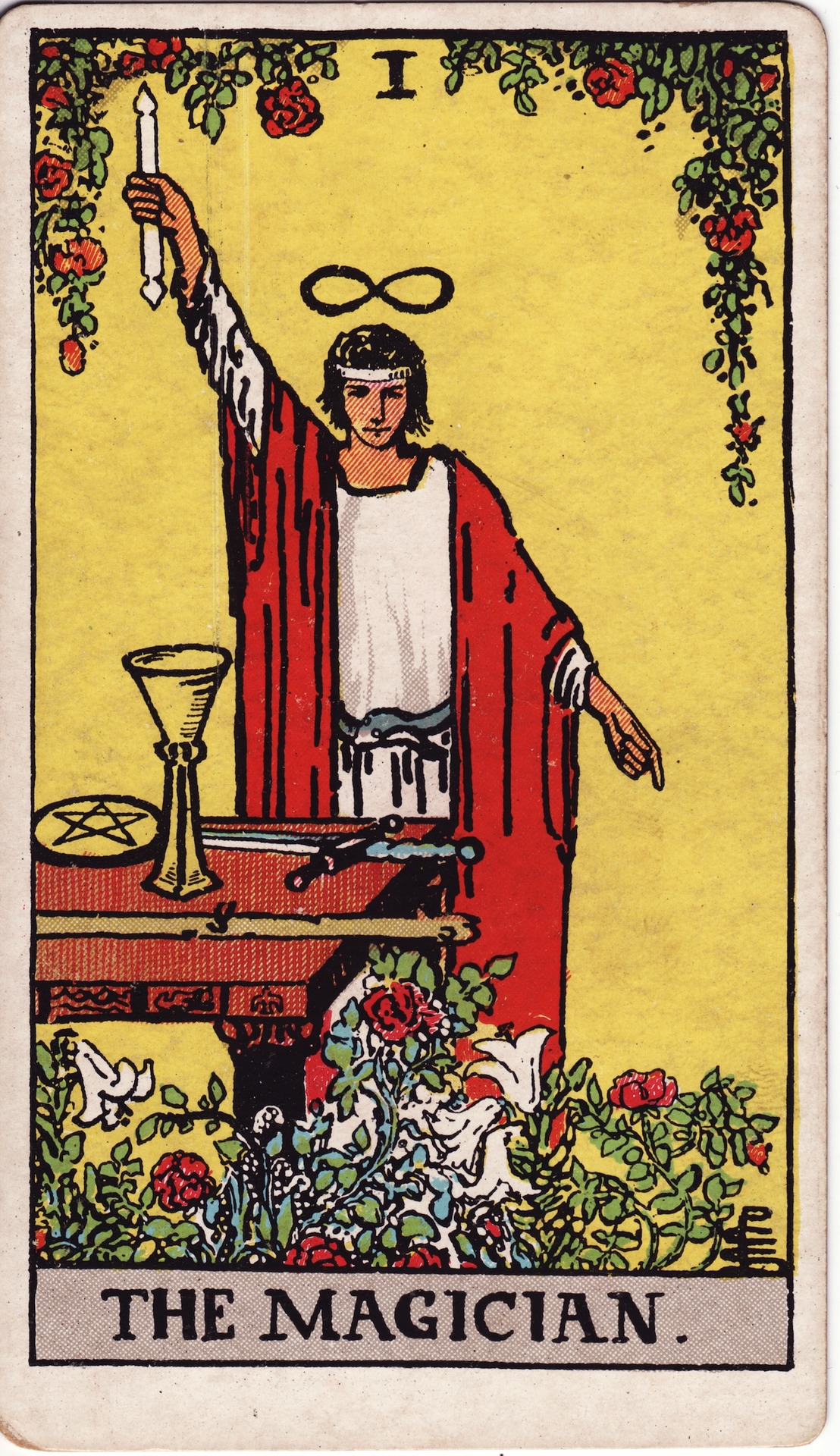

The Rider-Waite-Smith deck became, and remains, the world's most widely used tarot deck. It established the visual conventions that the vast majority of modern decks follow, and its imagery is what most people picture when they think of tarot cards.
The Twentieth Century and the Tarot Renaissance
Through the early twentieth century, tarot remained primarily the domain of occultists and esotericists. Arthur Edward Waite, Aleister Crowley (who created the Thoth Tarot with Lady Frieda Harris in 1943), and Paul Foster Case all produced important decks and writings that shaped tarot's development within esoteric circles.
The broader public discovery of tarot began in earnest during the 1960s and 1970s, as interest in alternative spirituality, Eastern philosophy, and the occult expanded into mainstream culture. The counterculture embraced tarot as a tool for self-exploration, and a wave of new decks appeared catering to diverse aesthetics and traditions. Stuart Kaplan's acquisition of the U.S. rights to the Rider-Waite-Smith deck through U.S. Games Systems made it widely available for the first time, and sales exploded.
The 1970s and 1980s saw an important shift in how tarot was understood: from a system for predicting the future to a tool for psychological self-exploration. Writers like Eden Gray, Rachel Pollack, and Mary K. Greer reframed the cards through a Jungian lens, emphasising the archetypes of the Major Arcana and the value of tarot as a mirror for the subconscious mind rather than an oracle making definitive pronouncements.
Modern Tarot (1990s–Present)
The explosion of tarot in recent decades has been remarkable. Thousands of new decks have been created, exploring virtually every aesthetic tradition imaginable — cats, crystals, mythology, art history, indigenous cultures, queerness, darkness, joy. The internet has created vast communities of tarot readers who share interpretations, techniques, and daily card pulls across social media platforms.
Tarot has moved firmly into the mainstream, embraced not just by those with esoteric interests but by therapists, coaches, artists, writers, and ordinary people seeking a reflective tool for navigating life. "Tarot therapy" practices have emerged that use the cards explicitly as a therapeutic medium, entirely separate from any supernatural claim.
The rise of AI has opened a new chapter. Applications like The Digital Seer can now analyse the actual visual imagery of tarot cards — the same symbols, colours, and compositions that human readers have meditated on for centuries — and generate nuanced, personalised interpretations that honour both the card's traditional meaning and the specific context of your reading.
Tarot Today
Six centuries after the first tarot cards were painted in Milan, the tradition continues to evolve. What began as a card game for Italian nobles has become a global practice of self-reflection, artistic expression, and spiritual exploration, embraced by millions of people across cultures and backgrounds.
The enduring appeal of tarot lies in its extraordinary flexibility. The 78 cards, with their rich accumulated symbolism, function as a kind of visual vocabulary for the full range of human experience — love and loss, creativity and stagnation, justice and chaos, death and renewal. Whatever system of meaning you bring to them, they have a way of reflecting something true.
Suits & Elements →
Understand the four suits of the Minor Arcana and their elemental associations.
Major vs. Minor Arcana →
Learn the difference between the 22 Major and 56 Minor Arcana cards.
Card Meanings →
Browse all 78 Rider-Waite-Smith card meanings.